
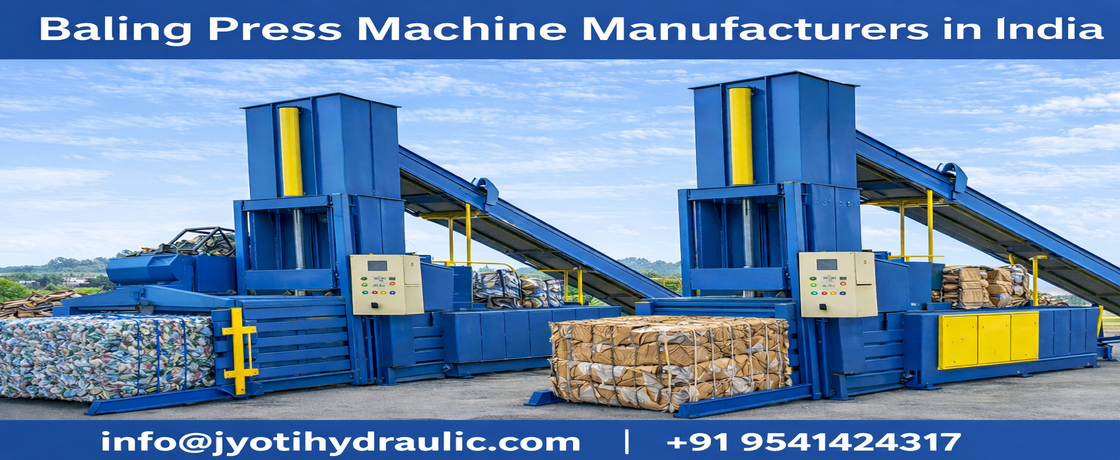
Jyoti Hydraulic is redefining how Indian industries manage, compress, and monetize recyclable waste through advanced baling technology engineered for reliability, safety, and high output. As a trusted name in the recycling and waste-handling equipment segment, the company delivers powerful and efficient baling solutions designed for plastic scrap, cartons, paper waste, textile leftovers, metal scrap, and other industrial residues. In a market where operational efficiency, waste volume reduction, and sustainability are directly linked to profitability, choosing the right baling equipment is no longer optional—it is a strategic decision.
India’s industrial growth has significantly increased the generation of plastic scrap, packaging waste, corrugated cartons, woven bags, PET bottles, film rolls, and mixed recyclables. This has created a strong demand for high-performance baling systems that can handle varied materials while ensuring lower storage costs and easier transportation. Businesses searching for a dependable Carton Baling Machines Manufacturer in India, experienced Scrap Baling Machine Manufacturers in India, or reliable Baling Press Machine Manufacturers need solutions that combine robust design, hydraulic efficiency, user safety, and long service life. That is exactly where industrial baling machines become essential.
Introduction
Industrial baling machines play a vital role in modern waste management and material recovery operations. These machines are used to compress loose, bulky, and lightweight scrap materials into dense, compact bales that are easier to store, handle, transport, and sell. In sectors where plastic waste and packaging scrap accumulate rapidly, a baling machine helps create a cleaner workplace while improving material value.
For manufacturers, warehouses, recycling units, retail chains, logistics hubs, printing houses, and packaging facilities, baling is not just about waste compaction. It is about optimizing floor space, reducing labor dependency, improving housekeeping standards, and supporting circular economy practices. A professionally engineered hydraulic baling machine offers controlled compression, consistent bale density, and durable mechanical performance under demanding industrial conditions.
As industries continue to focus on waste segregation, recycling compliance, and cost control, the demand for high-capacity and application-specific balers is growing across India.
Industry Overview
India’s recycling and waste processing industry has evolved rapidly over the past decade. With stricter environmental expectations, increasing raw material costs, and higher volumes of industrial packaging waste, businesses are actively investing in baling systems to streamline scrap handling.
Plastic waste is one of the biggest contributors to industrial discard streams. Manufacturing units, FMCG facilities, e-commerce warehouses, logistics companies, and retail distribution centers generate large quantities of:
- PET bottles
- HDPE and LDPE containers
- Plastic films and wraps
- PP woven sacks
- Shrink packaging material
- Corrugated cartons
- Paper cores and board scrap
Loose scrap consumes excessive floor space and leads to inefficient storage, contamination, and higher transport costs. A bale, by contrast, converts these low-density materials into high-density bundles ready for recycling or resale.
This is why demand is rising for a dependable Carton Baling Machines Manufacturer in India and established Scrap Baling Machine Manufacturers in India who understand Indian operating conditions, material types, and production realities. Businesses today do not want generic machines; they want application-driven equipment that can work continuously, withstand variable loads, and deliver measurable savings.
Technical Insights: How an Industrial Plastic Baling Machine Works
An industrial plastic baling machine is primarily a hydraulic press system designed to compress recyclable waste into compact bales. Its working principle is simple in concept but requires precision engineering for consistent performance.
Basic Working Process
- Material Loading
Plastic scrap, cartons, packaging waste, or other recyclable material is fed into the chamber manually or through assisted loading systems. - Hydraulic Compression
The hydraulic cylinder activates the ram or platen, applying strong compressive force on the material inside the chamber. - Multiple Pressing Cycles
For bulky or springy materials like plastic films or cartons, several compression cycles may be used to achieve proper density. - Bale Formation
Once the desired compression level is reached, the material is tied with bale straps, wires, or binding material. - Bale Ejection
The finished bale is removed manually or through a semi-automatic or automatic ejection arrangement.
Core Components
A high-quality baling press machine typically includes:
- Heavy-duty fabricated steel body
- Hydraulic power pack
- Precision hydraulic cylinder
- Compression chamber
- Ram or platen assembly
- Pressure gauges and control valves
- Electric motor and control panel
- Bale tying slots
- Safety interlocks and emergency stop systems
Common Specifications
Specifications vary depending on use case, but industrial balers are often evaluated on:
- Pressing force / tonnage
- Chamber size
- Bale size
- Motor power
- Cycle time
- Machine dimensions
- Material handling capacity per hour
- Operation type: manual, semi-automatic, or automatic
- Single-phase or three-phase power compatibility
Important Features Buyers Should Look For
When evaluating Baling Press Machine Manufacturers, technical features matter more than brochure claims. Key features include:
1. Strong Hydraulic System
The hydraulic system should deliver consistent pressure without overheating, leakage, or unstable ram movement.
2. Rugged Structural Design
A reinforced chamber and frame are necessary for long-term durability, especially when handling rigid plastic, carton bundles, or mixed scrap.
3. Energy Efficiency
Modern hydraulic circuits can reduce unnecessary power consumption and improve cycle efficiency.
4. Operator Safety
Safety guards, controlled movement, emergency stop buttons, and overload protection are critical for industrial operation.
5. Low Maintenance Design
Easy access to hydraulic components, durable seals, and reliable control systems help reduce downtime.
6. Application-Specific Customization
Different industries need different bale sizes, chamber capacities, and pressure ranges. A capable manufacturer should offer customization.
Applications in Different Industries
Industrial plastic and scrap baling machines are used across a wide spectrum of industries. Their versatility is one of the main reasons they are indispensable in material recovery systems.
1. Plastic Recycling Industry
Recyclers use balers to compress PET bottles, plastic containers, film scrap, injection molding waste, and post-industrial plastic residues. Compact bales improve transport economics and make downstream shredding or sorting more manageable.
2. Packaging and Corrugation Units
Corrugated board plants and packaging facilities generate significant carton and paper scrap. This makes the demand for a skilled Carton Baling Machines Manufacturer in India especially strong. Carton balers help organize waste efficiently and maintain a cleaner production floor.
3. Warehouses and Logistics Centers
Large warehouses produce volumes of shrink wrap, corrugated cartons, packaging straps, and stretch films. Baling these materials reduces clutter and improves housekeeping.
4. Retail Chains and Supermarkets
Retail back-end operations accumulate cardboard boxes, paperboard, and plastic wrapping every day. Compacting the waste improves storage efficiency and supports recycling initiatives.
5. Textile and Garment Industry
Textile factories generate fabric cuttings, packaging waste, yarn cones, and woven sacks. Baling helps reduce scrap volume and supports better resale value.
6. Printing and Paper Industry
Paper trim, damaged cartons, printed board waste, and rejected packaging materials can be compacted into dense bales for easy dispatch.
7. Manufacturing Plants
Automotive, FMCG, engineering, chemical, and appliance manufacturers generate mixed packaging and process waste. Balers help integrate waste handling into lean factory practices.
8. Municipal and Institutional Waste Streams
In selected operations, balers are also used for segregated dry waste such as paper, plastics, cartons, and light recyclables from collection centers and waste sorting facilities.
Key Benefits and Advantages
Installing an industrial baling machine offers direct and measurable operational advantages.
Reduced Waste Volume
Loose plastic scrap and cartons take up excessive storage space. Baling dramatically reduces volume, often by several times depending on the material.
Lower Transportation Costs
Denser bales mean more material can be transported in fewer trips, reducing logistics costs.
Better Scrap Value
Compact, sorted, and tied bales are easier for recyclers to handle, which can improve resale realization compared to loose scrap.
Improved Housekeeping
Baled waste eliminates clutter, improves factory aesthetics, and supports safer movement within the premises.
Efficient Material Handling
Standardized bale sizes simplify loading, stacking, inventory control, and dispatch.
Labor Savings
Manual waste handling becomes less chaotic and more organized with a baling system in place.
Environmental Compliance
Baling supports recycling efforts and helps organizations align with sustainability and waste management goals.
Strong Return on Investment
The cost savings from better storage, lower transport charges, reduced handling effort, and improved scrap recovery often justify the investment quickly.
Buying Guide: How to Choose the Right Baling Machine
Selecting the right baler requires more than comparing price. Businesses should evaluate both current and future requirements.
Understand Your Material Type
Is the machine intended for soft plastic film, PET bottles, cartons, woven bags, paper waste, or mixed scrap? Different materials behave differently under compression.
Estimate Daily Waste Volume
Your daily or weekly scrap generation determines machine capacity. Undersized machines create bottlenecks, while oversized models may lead to unnecessary capital expense.
Evaluate Bale Size Requirements
The ideal bale size depends on storage space, transporter preferences, and buyer requirements in the recycling chain.
Check Hydraulic Pressing Force
Low-density materials may need different pressure characteristics than rigid plastic scrap or carton bundles. The right tonnage ensures consistent bale density.
Review Power and Installation Needs
Confirm electrical load, floor space, loading method, and operational layout before purchase.
Prioritize Build Quality
Choose Scrap Baling Machine Manufacturers in India that use quality steel fabrication, reliable hydraulic cylinders, branded seals, and robust power packs.
Ask About Service Support
After-sales service, spare parts availability, installation guidance, and maintenance support are essential for long-term machine performance.
Consider Customization
A good manufacturer understands that one machine design does not fit all industries. Custom chamber dimensions, bale ejection options, and control systems can make a major difference.
Evaluate Safety Features
Safety is non-negotiable. Ensure the machine includes proper guards, hydraulic control stability, and operator-friendly controls.
Future Trends in the Industry
The baling machine industry is moving toward smarter, more efficient, and more specialized solutions.
Automation and Smart Controls
Semi-automatic and automatic balers are becoming more popular in high-volume waste environments. Control panels with better monitoring and operating simplicity improve productivity.
Energy-Efficient Hydraulics
Manufacturers are increasingly focusing on hydraulic efficiency to reduce power usage without compromising pressing force.
Material-Specific Designs
Machines are becoming more specialized for PET bottles, plastic film, textile waste, cartons, and metal scrap rather than relying on one universal design.
Integration with Recycling Systems
Future facilities will increasingly connect balers with conveyors, shredders, and sorting systems for end-to-end waste processing.
Sustainability-Driven Adoption
As industries become more conscious of environmental responsibility, baling technology will continue to play a larger role in organized recycling and resource recovery.
Why Manufacturer Expertise Matters
When searching for Baling Press Machine Manufacturers, businesses should look beyond machine appearance and focus on engineering capability. A reliable manufacturer understands compression mechanics, hydraulic stability, chamber design, structural stress, and operational ergonomics. They also know how Indian industrial users operate: long hours, variable scrap quality, rough usage conditions, and demand for dependable after-sales support.
An experienced manufacturer adds value by helping customers choose the right machine configuration, not just selling available stock. That expertise makes a major difference in performance, safety, and long-term ownership cost.
Conclusion
Industrial baling machines have become essential for businesses that want to manage plastic scrap, carton waste, and other recyclables in a smarter and more profitable way. From reducing storage problems to improving transport efficiency and enhancing scrap value, these machines deliver practical and financial advantages across industries.
For companies looking for a trusted Carton Baling Machines Manufacturer in India, dependable Scrap Baling Machine Manufacturers in India, or experienced Baling Press Machine Manufacturers, the right choice is one that combines engineering strength, hydraulic precision, safety, and application-focused design. A well-built industrial plastic baling machine is more than a waste-handling device—it is an investment in operational efficiency, sustainability, and long-term business value.
FAQ Section
1. What is an industrial plastic baling machine?
An industrial plastic baling machine is a hydraulic compression system used to compact loose plastic scrap into dense bales for easy storage, handling, transport, and recycling.
2. Who should use a carton baling machine?
Carton baling machines are ideal for warehouses, supermarkets, packaging units, logistics centers, printing facilities, and manufacturing plants that generate large volumes of cardboard or corrugated box waste.
3. Why is a baling press machine important in recycling operations?
A baling press machine reduces the volume of recyclable waste, improves scrap handling, lowers transport costs, and increases the resale value of compacted material.
4. How do I choose the right baling machine capacity?
The right capacity depends on your daily scrap volume, material type, available floor space, desired bale size, and operating frequency.
5. What materials can a scrap baling machine handle?
Depending on design, a scrap baling machine can handle plastic scrap, cartons, paper, PET bottles, textile waste, packaging film, woven sacks, and even selected metal scrap.
6. What should I check before buying from scrap baling machine manufacturers in India?
You should evaluate machine build quality, hydraulic performance, chamber size, pressing force, power consumption, safety features, customization options, and after-sales service support.
7. Are hydraulic baling machines energy efficient?
Modern hydraulic baling machines can be designed for efficient power usage, especially when they use optimized hydraulic circuits and quality components.
8. What is the benefit of buying from a specialized carton baling machines manufacturer in India?
A specialized manufacturer can provide better application understanding, custom machine sizing, stronger construction, local service support, and better suitability for Indian industrial conditions.
9. Can baling machines improve scrap sale revenue?
Yes. Properly compacted, sorted, and tied bales are easier to transport and process, which often improves scrap recovery value compared to loose waste.
10. Are baling press machines suitable for small and medium businesses?
Yes. Baling machines are available in different sizes and capacities, making them suitable for both smaller units and large-scale industrial operations.
Contact Us for the Right Baling Solution
Looking for a reliable industrial plastic baling machine that delivers performance, durability, and long-term value? Connect with Jyoti Hydraulic for high-quality solutions tailored to your waste handling and recycling needs.
Contact us today to:
- Get expert consultation
- Request a quotation
- Discuss your application requirements
📧 info@jyotihydraulic.com
📞 +91 9541424317


